
Origin: USSR
Date: 1985
Design: Twin Lens Reflex
Film Format: 120
Negative Size: 6×6 or 6×4.5 (vertical orientation)
Lens: Fixed, glass lens, 75mm 4.5
I wanted to take some time to talk about my much-maligned LOMO Lubitel 166U. I adore this little camera, and shoot more medium format through this Soviet hunk of plastic than any of my other medium format cameras. As long as your expectations are set from the beginning, this s a perfectly acceptable compact TLR and a great option for someone getting into film photography – someone who wants to actually learn about the exposure triangle, sunny 16, and who doesn’t want a point-and-shoot camera that does everything their DSLR does but on a piece of celluloid.
History
The Lubitel was made by the Leningrad Optical Mechanical Organization, a state-owned manufacturer of optical equipment in the Soviet Union – LOMO is the acronym most commonly used. (Modern-day use of “Lomography”, i.e., the camera and film brand, is related to LOMO in etymology but is completely unrelated to the original Soviet LOMO company.)
The Soviets originally intended the Lubitel, which translates to “Amateur” in English, to be the everyman’s TLR camera. While in the West, 35mm dominated consumer cameras, with good quality and 36 frames in a convenient cartridge, in Asia medium format lingered in the consumer market much longer – a form of the Lubitel was manufactured from the 1950’s to the 1990’s in the USSR and Russia, and in China the similar Seagull TLR’s and the Holga 120’s were widespread as consumer grade cameras.
The original Lubitel was a box camera, and not technically a TLR – though it had two lenses, the viewfinder merely framed your image, but focusing was zone focus only. The Lubitel 2 was the successor, and was a true TLR, having a paired focusing and taking lens. The model I own is the 166U, “U” meaning “Universal”, in reference to its ability to shoot square or 645 ratio images with the addition of a 645 mask, much like a Holga. There were a few variations of the 166, and my understanding is that the 166U is the latest one.
Expectations
The expectations you have when you first encounter a camera like this really determine how much you enjoy it. That being said, there are a few things to know before buying or shooting.
Soviet cameras are not known for build quality, especially any camera made in the 70s-80s. Cameras branded with Cyrillic spelling (Domestic market) are generally inferior to Roman spelling (Export market). The USSR was very image conscious, and the most important things were to export functional budget technology and to manufacture an impossibly high number of units. Quality control had to fail somewhere, and it tended to be models that were meant to be sold within the USSR. My Lubitel is a 1985 domestic model, so double jeopardy. I bought it from Ukraine and paid about $45 plus shipping for it. The camera I received was beautiful, looked new, and came with a leatherette case. As I expected, the taking lens had an issue – after disassembling, a ring was missing that held the lens assembly together. I had to cut a paper gasket to fill space and make it fit tighter, then it worked perfectly. The difficult part of this was calibrating the focus – I found a guy on youtube that went over this process in a thick Slavic accent. I will probably post a step-by-step guide later. if you buy a Lubitel from overseas on eBay, expect that you will have a repair or quirk to deal with.
The other thing you must accept about the Lubitel, is that the market it was built for was for families on vacation and common everyday use. It was the era’s equivalent of the disposable camera. Most people that talk about the Lubitel compare it to other TLRs, like Yashicas or Mamiyas – this comparison will only lead to disappointment, and this is why the Lubitel is crapped on so much. The Lubitel coexisted in a world of outdated, mass-market 120 shooters like the Holga. I think if you compare all plastic medium format cameras to the Lubitel, you will probably be impressed. I like to say that the Lubitel 166 is a Holga with the ability to focus, typical adjustments for aperture and shutter speed, a back that won’t fall off, and a sharper glass lens.
“Lubitel 166U will likely be a fixer-upper, and is at its core a super old, budget camera for family use”
In summary – a Lubitel 166U will likely be a fixer-upper, and is at its core a super old, budget camera for family use. So don’t expect any super-crisp commercial style images to come from this camera. In addition, there is no light metering so you must manually adjust for the exposure.
Pros
At the top of the “pros” list for me has to be the brutalist, foreign aesthetic that LOMO imbued the Lubitel 166 with. Although I don’t care for attention when shooting, I always receive compliments and questions about the strange little box that I am taking pictures with. I especially love the domestic editions of the camera featuring the Cyrllic writing on the front.
The Lubitel is as compact as a 120 format camera can be – mere centimeters wider than the spool. This makes these cameras easy and fun to carry, and they palm easily in one hand. Since the ground glass is so small, there is a pop-out magnifier to aid focusing. There is also a “speed viewfinder” for shooting without using the ground glass at all.
Multiple exposures are easy like any other manual advance medium format camera. The camera features 1/250, 1/125, 1/60, 1/30, 1/15 and Bulb shutter speeds. Aperture ranges from f22 to f4.5, enough control for everyday shooting and creative effects. The 166U also has a self-timer. The Lubitel 166U’s signature feature is the ability to shoot 6×6 or 6×4.5, the camera defaults at 6×6, but has a 6×4.5 mask available. Good luck finding the mask by itself if it does not come with the camera.
Image quality is surprisingly good – it punches well above its weight compared to toy cameras, but personally I am not going to even try and compare it to a Japanese or German lens.
Not to be forgotten, the Lubitel 166U is very cheap. I got mine for $45 on eBay from a Ukrainian seller. They are very easy to find from abroad, but much more difficult to find in the US, and a more typical price in 2025 for a great condition Lubitel is closer to $85. There are also plenty of NOS units still in the box, these will cost closer to $100-$125. This price point makes the Lubitel 166U the most accessible TLR for someone entering the world of medium format photography or someone who just wants a cool-looking camera.
Cons
The Lubitel 166U didn’t dodge the bullet that is inconsistent quality control that plagued the USSR’s products. Although I only have one of these cameras, reading enough reviews shows that a weird lens assembly is common. The box, hardware, and knobs on the camera feel sturdy enough to survive a moderate drop, and the weight is fairly robust – the lens assemblies feel more dainty than the rest of the camera. Although the camera is simple and easy to work on, if toying with a camera is something you don’t want to deal with, this camera is not for you.
As far as shooting goes, the compact size makes using the ground glass difficult. You basically have to use the magnifier held close to your eye, as if looking into a viewfinder on an SLR or rangefinder. There is no fresnel (at least on my model), you have to adjust the focus lens until the image becomes less grainy in the ground glass. I recently bought a replacement ground glass with a fresnel that I plan on switching out, as this is my biggest gripe about the Lubitel. That being said, I am usually shooting still subjects at f8-f16 so focusing works out for me. It seems like the camera is built to be a dual purpose TLR and zone focusing camera, and I could see it being used as such for street photography, for example – except for the fact that there is no zone focusing guide.
Summary
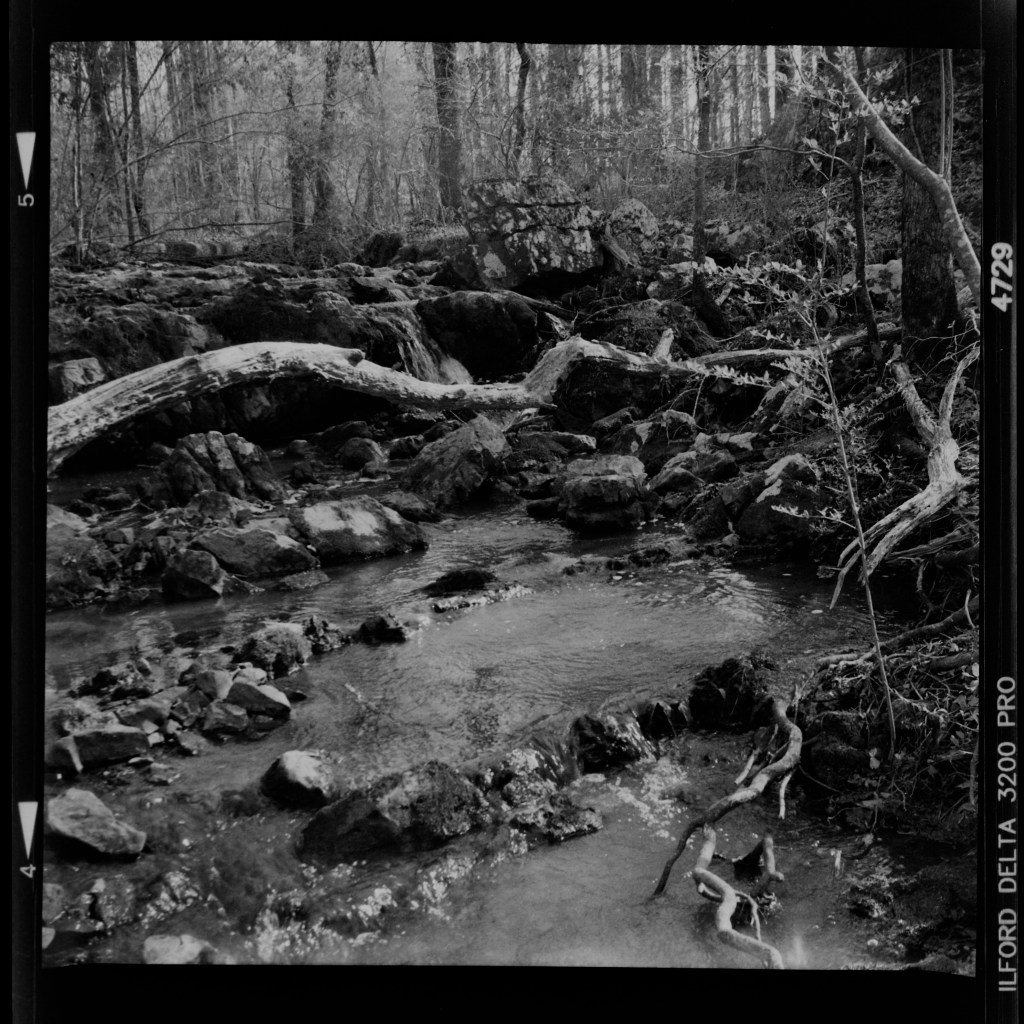
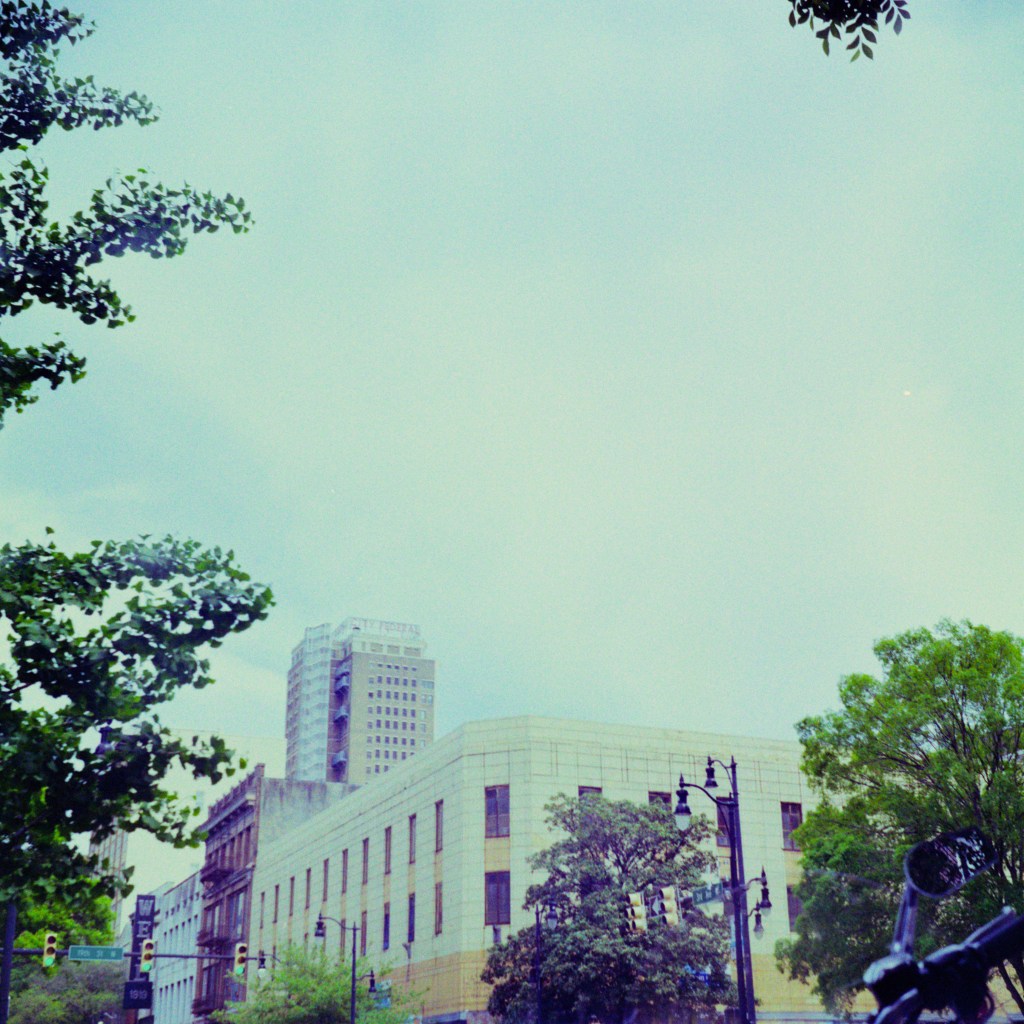
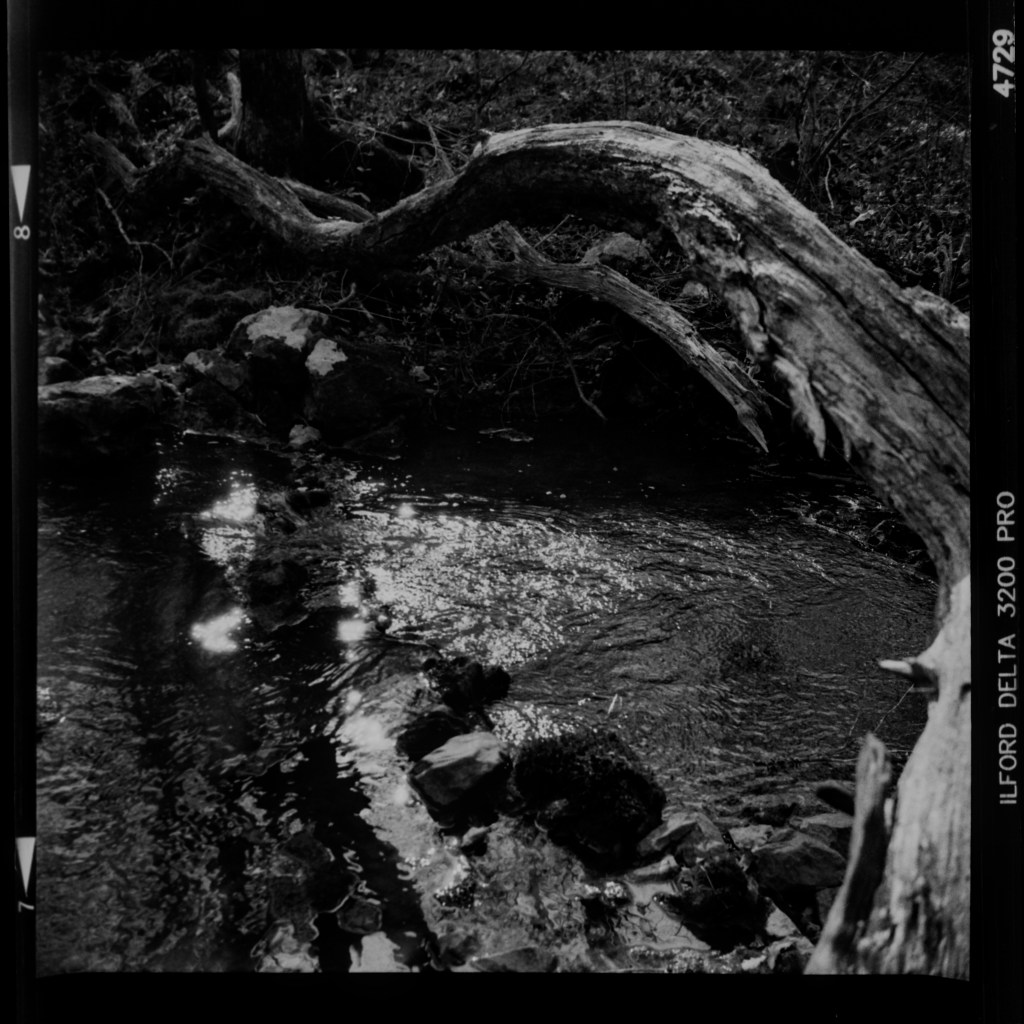
In conclusion, I recommend the Lubitel 166U as a fun to use, interesting, and compact budget friendly camera. Stay away if you want a camera that requires no work out of the box, or if your aim is ultra-high image quality. This camera is best suited for casual landscape shooting or artsy shooting according to Lomography’s philosophy. I think this camera could be a sleeper street photography weapon if someone could get an intuitive grasp on zone focusing. Below I have included some sample images taken with my Lubitel 166U using Delta 3200 and Kodak Gold 200. I plan on purchasing a NOS export edition at some point because I am not done with this camera yet.
If you want to roll the dice on a unique camera, and you only have a couple dollars to your name maybe the Lubitel 166U is right for you!

 Floating Piece of Garbage
Leave a comment